

An Industry at a Crossroad
Telecom and broadband operators today face a pivotal moment in the evolution of their access infrastructures. As subscriber traffic continues to surge across Fiber-to-the-Home (FTTH), mobile, Wi‑Fi, and emerging 5G ecosystems, the demands placed on authentication, authorization, and accounting (AAA) systems have intensified dramatically. Legacy platforms, long embedded in the operational fabric of operators, struggle to adapt to modern expectations for elasticity, security, automation, and cloud readiness.
This reality is magnified by the End‑of‑Life (EoL) milestones of major AAA products, most notably Juniper Steel‑Belted RADIUS (SBR), which reached end of support on September 30th, 2023, and Cisco Prime Access Registrar (CPAR) on October 31st, 2025. Cisco’s own documentation emphasizes that although CPAR will continue functioning, its EoL status means the end of security patches and critical updates essential for secure and efficient operation.
The consequence is clear: several operators must now decide how to maintain secure, compliant, and scalable AAA functions in a world where their long‑trusted platforms are no longer sustainable.
The Growing Risks of Remaining on EoL Platforms
Continuing to operate outdated systems after their support periods introduces a progressively widening gap between operational requirements and what these legacy systems can deliver. Without continuous updates, security vulnerabilities inevitably emerge, placing operators at greater risk of unauthorized access or data breaches.
Performance degradation also becomes likely as subscriber counts increase and service portfolios diversify. Operators depending on outdated RADIUS implementations or fragmented server configurations face greater operational inefficiencies.
Finally, compliance represents another critical pressure: shifting regulatory frameworks require platforms to evolve, but unsupported systems quickly fall behind, exposing operators to potential penalties.
For all these reasons, the EoL of systems like Cisco’s CPAR and Juniper’s SBR is not merely a lifecycle milestone, but rather a structural inflection point for operators. And, although the retirement of these platforms introduces operational risk, it also creates an opportunity for operators to elevate their AAA architecture. Instead of extending the life of aging systems that lack ongoing security patches, cloud readiness, or modern policy capabilities, operators can use this turning point to implement a solution designed for evolving network realities.
NGIN AAA: A Modern, Cloud‑Ready AAA Foundation
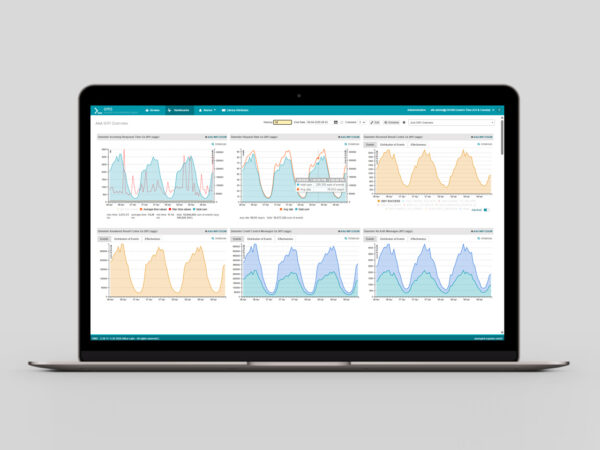 Against this backdrop, NGIN AAA from Altice Labs emerges as a compelling, future‑proof replacement. NGIN AAA offers a next‑generation AAA platform engineered for a world defined by multi‑access convergence, 5G complexity, cloud elasticity, and heightened security requirements.
Designed as a carrier‑grade, cloud‑ready AAA platform, NGIN AAA is already recognized globally for its reliability, scalability, and adaptability across a full spectrum of IP‑based access environments, providing flexible configuration, scalable deployment, and operational robustness across FTTH, mobile (legacy and 5G), Wi‑Fi, and enterprise scenarios.
NGIN AAA supports both RADIUS and Diameter, ensuring seamless interoperability with virtually all network access devices, core systems, Wi‑Fi controllers, and 5G service components, thereby allowing operators to transition from legacy AAAs without extensive re‑architecture. Its ability to manage subscriber authentication, dynamic IP allocation (via DHCP or RADIUS), Quality of Service (QoS) enforcement, session control, and advanced policy actions makes it a significant leap forward from legacy platforms.
NGIN AAA also integrates sophisticated operational tooling such as monitoring dashboards, KPIs, CDR (Call Detail Records) management, and rich API exposure to ensure deep alignment with the operator’s IT ecosystems. This addresses one of the main shortcomings of legacy AAA systems, which often relied on closed, static, or minimally extensible integration paths. Through its API‑centric design, NGIN AAA allows operators to operate with a level of automation and orchestration that outdated platforms simply cannot match.
Why NGIN AAA Is the Ideal Migration Path
Migrating from legacy systems extends well beyond functional replacement, creating an opportunity to modernize the AAA architecture for the coming decade.
NGIN AAA’s robust support across FTTH, mobile, Wi‑Fi, and 5G ensures operators can consolidate dispersed AAA functions into a unified platform that delivers real‑time responsiveness, consistent policy enforcement, and improved customer experience. The platform’s ability to scale effortlessly from a few hundred to millions of sessions makes it suitable for all kinds of operators, including those small ISP businesses or the ones undergoing aggressive growth or entering more demanding 5G service scenarios.
With legacy systems heading toward obsolescence, NGIN AAA enables operators to reduce long‑term cost, strengthen security posture, improve performance, and achieve readiness for next‑generation service innovation.
Final Takeaways: A Clear Path Forward
With major AAA systems (e.g., Cisco CPAR and Juniper SBR) reaching end‑of‑life, operators are right to question the sustainability of their current AAA infrastructures. But this moment does not need to be disruptive. Instead, it presents a strategic opportunity to modernize, consolidate, and future‑proof one of the most critical components in the subscriber lifecycle.
NGIN AAA offers a seamless and forward‑looking evolution path: a fully supported, scalable, cloud‑ready, and interoperable AAA solution built for the demands of next‑generation broadband and telecom services. By adopting NGIN AAA, operators ensure their networks remain secure, performant, and ready for whatever comes next, whether it is expanded FTTH penetration, 5G standalone adoption, advanced Wi‑Fi monetization, or emerging digital service innovations.